



 SEO
SEO Raveen Paswan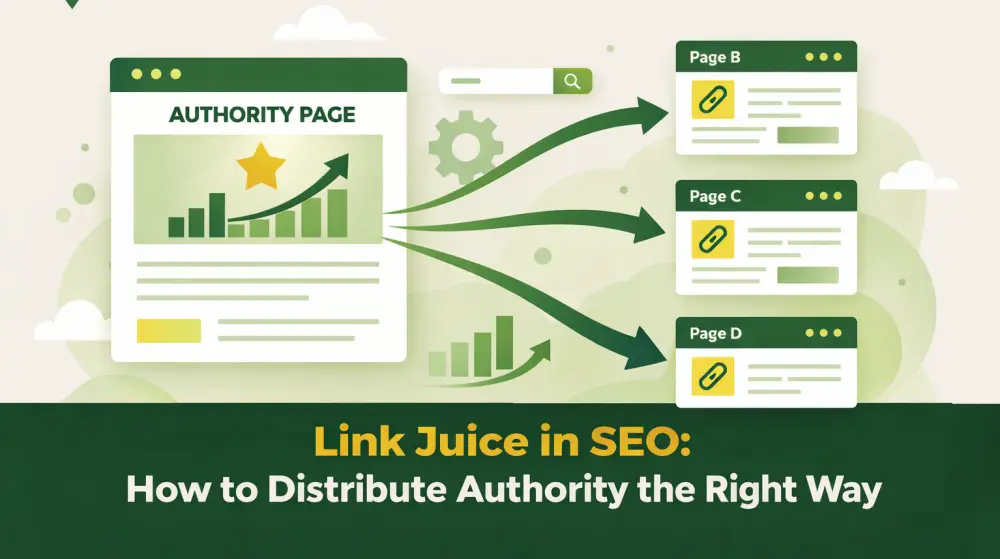
 More Blogs & News
Affordable, practical SEO solutions for startups and growing businesses looking to increase Google rankings, organic traffic, and real leads without agency-level costs or complexity.
What Is Link Juice? Definition and Meaning
Link juice is the value passed from one page to another through a link. When a page links to another page, it shares part of its authority, trust, and ranking power. That shared value is called link juice.
In simple terms, link juice is how search engines measure recommendations between pages. A page that receives more link juice usually has a better chance of ranking higher.
What Is Link Juice in SEO?)
In SEO, link juice helps search engines decide which pages matter more. Links act like signals that tell search engines a page is useful, trusted, or important.
When many strong pages link to one page, that page gains more authority. This is why link juice plays such a big role in rankings.
We should remember that not all links pass the same value. A link from a trusted site carries more link juice than a link from a weak or unknown site.
How Link Juice Works?
Link juice works through links placed on a page. Every page has a limited amount of authority to pass.
If a page links to only a few pages, each link gets more value. If it links to many pages, the authority is divided.
This is why too many links on one page can weaken link juice. Search engines look at both quality and structure.
Link Juice Example
Let us take a simple example to make this clear. Imagine Page A has strong authority and links to Page B.
Page B receives part of Page A’s authority through that link. That transferred authority is link juice.
Now imagine Page A links to ten different pages instead. Each page receives a smaller share of link juice. This is how authority gets diluted.
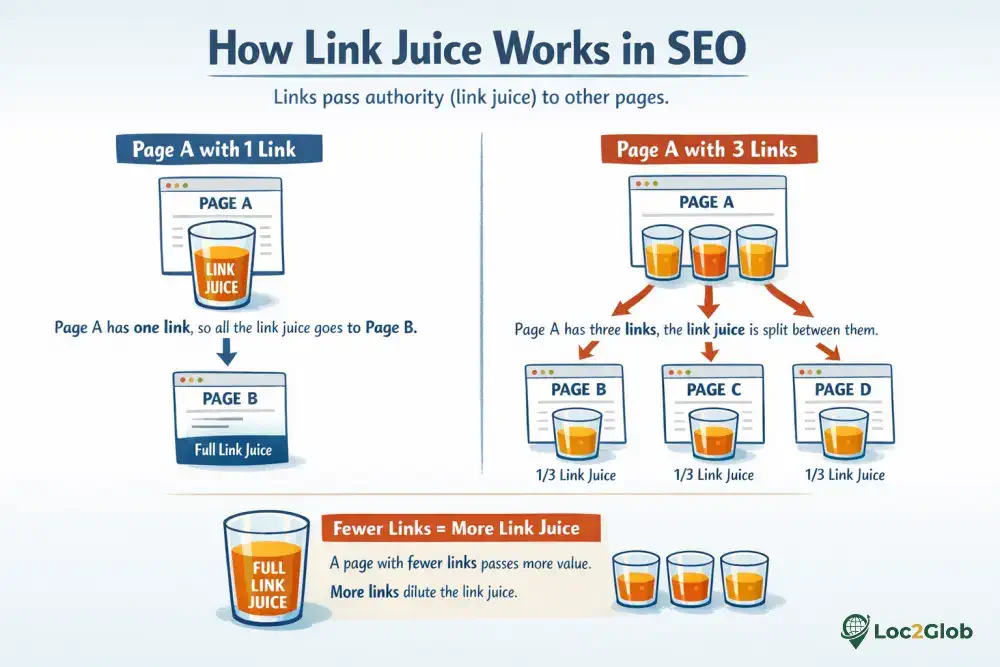
NOTE: This does not mean you should use only one link. If a page has just one link, Google may see the content as weakly connected or less helpful. Proper internal links improve crawling and site structure, while high-authority external links build trust and relevance. Using multiple relevant links improves user experience and supports stronger SEO performance.
Internal Link Juice and Why It Matters
Internal link juice flows within your website. It moves authority from one page to another inside the same domain.
Many websites earn backlinks but still fail to rank key pages. This usually happens because internal link juice is not guided properly.
When we control internal links, we control how authority spreads. That gives us more control over rankings.
How Internal Links Pass Link Juice
Internal links pass link juice the same way external links do. The key difference is that you have full control over internal links.
When you link from a strong page to a weaker but important page, authority flows naturally. Over time, this helps improve rankings.
You should always link with purpose. Random internal links do not help much.
How to Pass Link Juice in SEO the Right Way
To pass link juice correctly, you need to set priorities. Not every page deserves the same level of authority.
Start by identifying your strongest pages. These may have backlinks, traffic, or stable rankings.
From those pages, link to pages that matter most for your goals. Use clear anchor text so search engines understand the topic of the linked page.
How to Distribute Authority the Right Way
Authority should not be spread evenly across your site. If every page gets equal attention, none of them stand out.
We should send more link juice to core pages. These may include main guides, service pages, or high-value blog posts.
Avoid pushing authority to low-value pages like login screens or filters. That only wastes link juice.
Best Way to Get Link Juice
The best way to get link juice is through quality links. One strong link can outperform many weak ones.
You can earn link juice by creating content that answers real questions. When content is useful, people naturally link to it.
Internal links also matter here. They help you reuse the authority you already have.
How to Get Link Juice Without Breaking Rules
Many people try shortcuts to get link juice. This often leads to ignored links or penalties.
Safe methods include earning links naturally and improving site structure. Updating old content and linking it better also helps.
When we focus on clarity and usefulness, link juice grows over time without risk.
How to Increase Link Juice Using Internal SEO
You can increase link juice by cleaning your site structure. Fix broken links and remove redirect chains.
Reduce unnecessary links on important pages. This allows more authority to flow through key links.
Also, make sure important pages are easy to reach. Pages buried too deep receive less link juice.
Does 301 Redirects Pass Link Juice?
Yes, a 301 redirect passes link juice. Search engines treat it as a permanent move.
When done correctly, most authority moves to the new URL. This helps protect rankings during site changes.
Problems happen when redirects stack in long chains. Each extra step weakens link juice.
301 Redirect Link Juice Best Practices
Always redirect old pages to the closest matching page. Do not redirect everything to the homepage.
Use one clean redirect whenever possible. Avoid loops or unnecessary steps. This keeps link juice strong and clear for search engines.
Does Canonical Pass Link Juice?
Yes, canonical tags can pass link juice when used correctly. They help combine authority from duplicate pages.
A canonical tells search engines which page should be treated as the main version. If search engines trust the signal, authority flows there.
Canonicals work best when the content is very similar. They should not be used to fix weak pages.
Do Nofollow Links Pass Link Juice?
This is a question many people ask when learning SEO. In the past, nofollow links were designed to block link juice completely. Search engines were told not to use those links for ranking signals.
Today, nofollow works more like a suggestion than a strict rule. In most cases, nofollow links do not pass direct link juice, but they are still useful. They can bring traffic, help search engines discover content, and support brand trust.
So if you are asking whether nofollow links help SEO, the answer depends on your goal. They are not reliable for authority, but they are not useless either.
Should You Use Nofollow on Internal Links?
In general, you should avoid using nofollow on internal links. Internal links are meant to move authority inside your site. Blocking that flow often creates more problems than benefits.
I have seen websites nofollow their own category or archive pages. This usually weakens the overall site structure. If a page exists and supports your content, it should receive link juice.
If a page should not rank, noindex is usually a better option than nofollow.
Does Noindex Pass Link Juice?
A noindex page can still pass link juice if the links are followable. This is an important detail many people miss. Noindex only controls whether a page appears in search results.
When links on a noindex page are followable, authority can still flow through them. Search engines may not rank the page, but they can still crawl and use its links.
If a page is set to both noindex and nofollow, link juice stops there. That setup should be used carefully.
When Should You Use Noindex?
Noindex is useful for pages that users need, but search engines do not. Examples include thank-you pages, internal search results, or temporary content.
Before applying noindex, think about how the page fits into your internal linking. If the page connects important content, blocking it may reduce authority flow.
Always review internal links before using noindex on any page.
Common Link Juice Mistakes That Hurt SEO
One common mistake is placing too many links on important pages. This spreads authority too thin and reduces impact. Every link should serve a purpose.
Another mistake is ignoring internal linking completely. Pages with no internal links often struggle to rank, even with good content.
Redirect chains are another issue. Each extra redirect weakens authority and slows crawling.
Do Footer and Sidebar Links Pass Link Juice?
Footer and sidebar links can pass link juice, but they are weaker than content links. Search engines give more weight to links placed naturally inside content.
Footer links are useful for navigation and structure. They should not be your main method for passing authority.
If you want to guide link juice, use contextual links within articles.
How Anchor Text Affects Link Juice
Anchor text helps search engines understand what a linked page is about. Clear and natural anchor text improves how link juice is used.
Avoid vague phrases like “click here” when possible. Use words that simply describe the page topic.
Do not overuse exact keywords. Natural wording works better and looks safer.
How Many Links Should a Page Have?
There is no fixed rule for link count. The right number depends on content length and intent.
A good approach is to ask whether each link helps the reader. If it adds value, keep it. If it does not, remove it.
This keeps the authority focused and the pages easier to understand.
How to Increase Link Juice Without Building Links
You do not always need more backlinks to grow. Many sites already have unused authority.
Fix broken links and clean redirect chains. Merge thin pages where needed. Improve navigation so key pages are easier to reach.
These steps improve authority flow across the site.
Final Thoughts
Link juice is not about tricks or quick wins. It is about structure, clarity, and intent. When authority flows to the right pages, rankings improve naturally. When it flows randomly, even strong sites struggle.
Focus on clean internal links, smart redirects, and useful content. That approach works long-term and stays stable across updates.
About the Author
Raveen Paswan is an SEO Specialist with 9 years of experience working with small, medium, and large business websites. He helps brands grow organic visibility through ethical, data-driven SEO strategies. Connect with him on LinkedIn and Twitter(X) for SEO insights, updates, and industry trends.